TopMenu

Showing posts with label iPhone 5S. Show all posts

Wednesday, 11 September 2013

Apple iPhone 5c vs Apple iPhone 5s vs Apple iPhone 5 comparison

General   
Alternate names
Release dateSeptember 2013September 2013November 2012
Form factorTouchscreenTouchscreenTouchscreen
Dimensions (mm)124.40 x 59.20 x 8.97123.80 x 58.60 x 7.60123.80 x 58.60 x 7.60
Weight (g)132.00112.00112.00
Battery capacity (mAh)1440
Removable batteryNoNoNo
Bundled accessoriesApple EarPods with Remote and Mic, Lightning to USB Cable, USB Power Adapter, DocumentationApple EarPods with Remote and Mic, Lightning to USB Cable, USB Power Adapter, DocumentationApple EarPods with Remote and Mic, Lightning to USB Cable, USB Power Adapter, Documentation
ColoursWhite, Pink, Yellow, Blue, GreenSpace Gray, Gold, SilverWhite, Black
SAR valueNANANA
Display   
Screen size (inches)4.004.004.00
TouchscreenYesYesYes
Touchscreen typeCapacitiveCapacitiveCapacitive
Resolution640x1136 pixels640x1136 pixels640x1136 pixels
Pixels per inch (PPI)326326326
Colours
Hardware   
Processor  1.3GHz   dual-core
Processor makeApple A6Apple A7 (64-bit ARMv8)Apple A6
RAM1GB
Internal storage16GB16GB16GB
Expandable storageNoNoNo
Expandable storage type
Expandable storage up to (GB)
Camera   
Rear camera8-megapixel8-megapixel8-megapixel
FlashYesYesYes
Front camera1.2-megapixel1.2-megapixel1.2-megapixel
Software   
Operating SystemiOS 7iOS 7iOS 6.1.4
Skin
Java supportNoNoNo
BrowserHTML
Browser supports FlashNoNoNo
Connectivity   
Wi-FiYesYesYes
Wi-Fi standards supportedWiFi A, WiFi B, WiFi G, WiFi NWiFi A, WiFi B, WiFi G, WiFi NNA
GPSYesYesYes
BluetoothYes, v 4.00Yes, v 4.00Yes, v 4.00
NFCNoNoNo
InfraredNoNoNo
DLNANoNoNo
Wi-Fi DirectNoNoNo
MHL OutNoNoNo
HDMINoNoNo
Headphones3.5mm3.5mm3.5mm
FMNoNoNo
USBNoNoNo
Charging via Micro-USBNoNoNo
Proprietary charging connectorYesYesYes
Proprietary data connectorYesYesYes
Number of SIMs111
GSM/ CDMAGSMGSMGSM
2G frequencies supportedGSM 850, GSM 900, GSM 1800, GSM 1900GSM 850, GSM 900, GSM 1800, GSM 1900NA
3GYesYesYes
3G frequencies supportedNA1900, 2100NA
Sensors   
Compass/ MagnetometerYesYesYes
Proximity sensorYesYesYes
AccelerometerYesYesYes
Ambient light sensorYesYesYes
GyroscopeYesYesYes
BarometerNoNoNo
Temperature sensorNoNoNo

Source:NDTV

iPhone Touch ID - All That Matters & All You Should Know

The brand new iPhone 5S isn't a big shot upgrade over the iPhone 5, but it does have something, I'd say 'innovative' - the Touch ID. As rumored, it's your fingerprint scanner that leads to a few interesting use cases. As Apple calls it, the sensor takes fingerprint scanning to an entirely new level with 500 PPI resolution. This means that it can scan your fingers very accurately to identify you uniquely. The sensor itself is just 170 microns in thickness and is capable of scanning in every possible direction; called 360 degree scanning.

touch-ID. ​

What are the possible uses of Touch ID Fingerprint Scanner?
  1. The home button which has the sensor retains its old functionality and acts as your quick resort to the home screen from any app.
  2. It adds an extra level of security to your Apple store purchases.
  3. It adds extra authentication to your iTunes digital downloads.

You will be able to authenticate yourself to iBooks by using your fingerprints. The feature is only available on iOS7; which by the way will make it to compatible Apple devices on September 18.

It's not clear whether the apple will allow multiple user accounts on the same iPhone using the new technology, but it'd definately be something to look forward to.

Security

Apple has promised that the fingerprint data is encrypted and stored in the A7 chip. The data will never be stored in the iCloud or even backed up on Apple's servers. Also, it's not clear how deep access will the developers have to the scanned data for innovative integration in their own apps.

The question is - do all these features push the game forward to the other players? Do you expect Samsung and other manufacturers to include the fingerprint scanners in their devices in coming months?

iPhone 5s and Apple A7's 64-bit architecture: What does it mean?

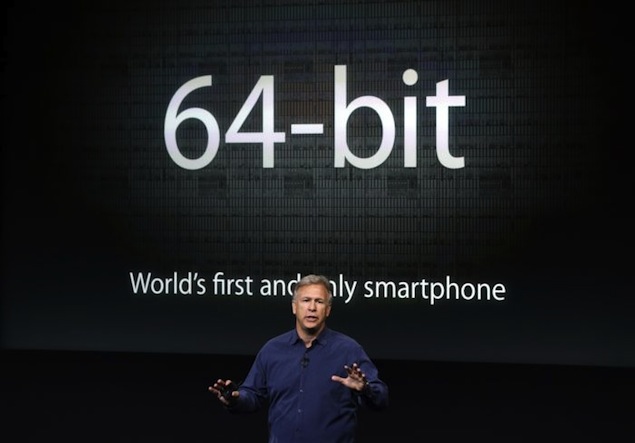
Apple launched two new iPhones, the iPhone 5c and iPhone 5s, at a special event on Tuesday. While the iPhone 5c sports almost the same internals as the iPhone 5, the iPhone 5s is Apple's new flagship that boasts of many "forward-looking" features as per Apple's claims, including a custom A7 chip (ARMv8 based), which boasts of 64-bit architecture, powering the phone, a first for a smartphone.

This means that the iPhone 5s would be the first mobile ARM chip with 64-bit support. According to Apple the chip has 64-bit desktop-class architecture, a modern instruction set, 2x general-purpose registers, 2x floating point registers, and over 1 billion transistors. While all this sounds too technical, it essentially implies that the architecture of the new chip should result in performance improvements.

In desktop computing, a 64-bit processor can perform tasks at double the speed of a 32-bit one as it can address more volatile memory or RAM. With double the address size, 64-bit processors can transfer data twice as fast. But a lot also depends on the amount of RAM built-in, and Apple has not shed any light on this (it usually does not). So, until a hardware review site actually investigates it, most figures, including number of cores and clock speeds, will remain a mystery. However, Apple has said that the processor is twice as fast as the iPhone 5 and up to 40 times faster than the first iPhone. 

However, not all these gains are derived from the switch to 64-bit, as hardware gurus at Anandtechpointed out from the launch event: "So just to be clear, the 2X increase in performance is not from the move to 64-bit." 

64-bit software will be needed to utilise the capabilities of the hardware, and Apple is shipping a 64-bit version of its mobile operating system, iOS 7 complete with 64-bit kernel, libraries and drivers along with optimised native apps with the iPhone 5s. So, all these apps will work much more efficiently. Even third party apps can be easily compiled for 64-bit architecture. As Donald Mustard from Epic games, the company behind the Infinity Blade games series said while demoing Infinity Blade III, it took them about two hours to compile the game for 64-bit.

Even if Apple doesn't ship the iPhone 5s with tons of RAM, it appears that it wants to prepare developers to make a transition to 64-bit apps making sure it's the first one to jump the gun, when smartphones make the switch. For now, because of the 64-bit kernel, one can expect a faster browser and app loading times, smoother video and audio playback, and faster calculations. Camera engine performance will also be improved, with faster autofocus and capture just some of the benefits implied.

The Apple A7's support for ARMv8 also implies goodies like full-virtualization support. It is also backward compatible with its 32-bit, therefore existing apps will face no real issues. The new custom chip also supports OpenGL ES version 3.0 graphics standard, which together with the 64-bit architecture, implies much improved graphical prowess, something that we can better hope to appreciate once Apple brings the A7 to the next-generation iPad and iPad mini, as expected.

Interestingly, with the inclusion of the M7 co-processor, which takes care of the sensor data processing on the device, allowing fitness, motion-sensing and voice-recognition based apps to function without draining the battery significantly, or decreasing total available processing power. This design, of offloading tasks to another processor for the sake of battery life and performance, is something we've been seeing other manufacturers attempt, such as Nvidia with its companion core on the Tegra 4, and Motorola's X8 computing system.

Just how the Apple A7 compares with its contemporaries, is something we'll have to wait and see, once the iPhone 5s gets launched and makes its way to the benchmarks.
Source:NDTV